


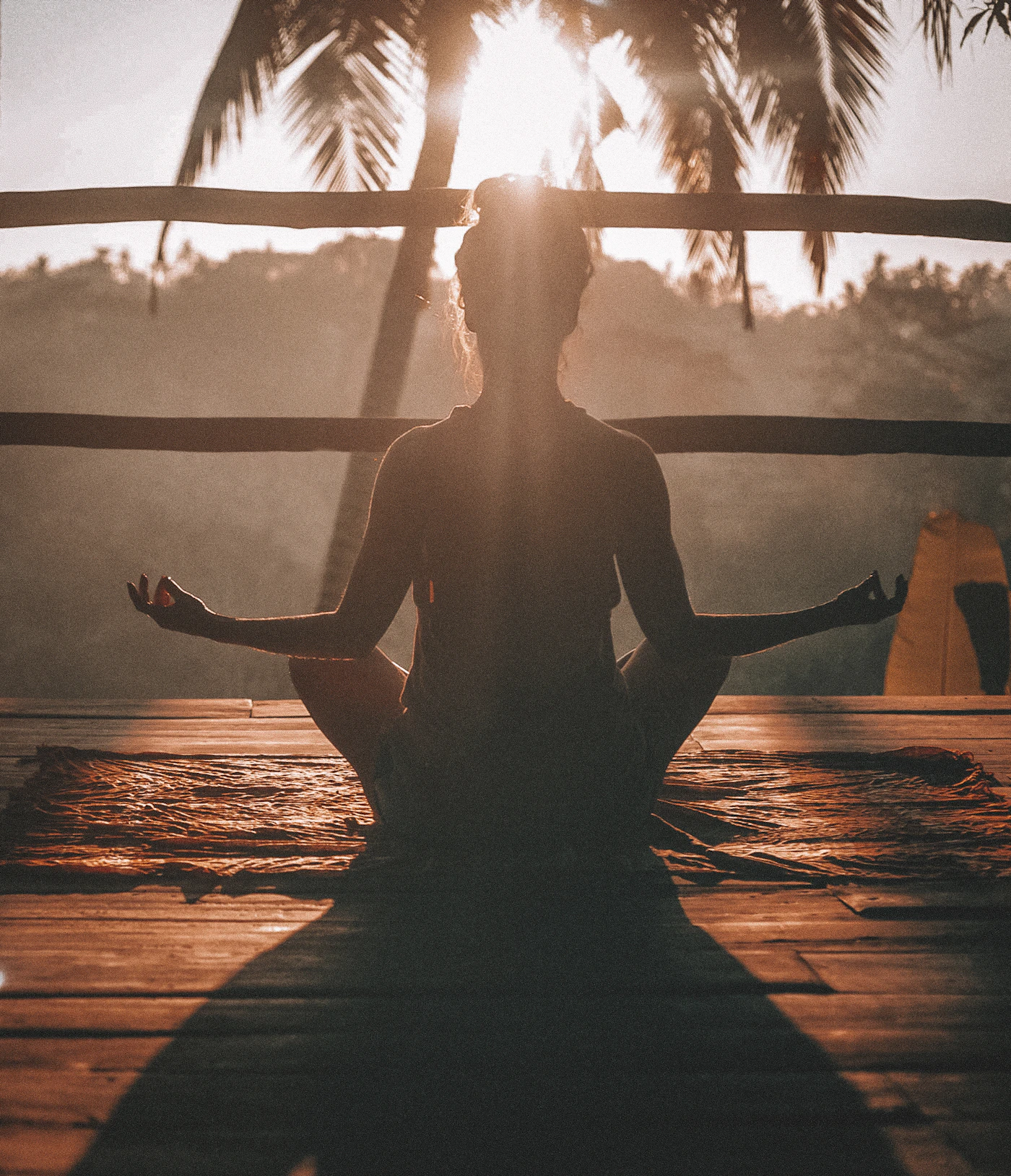
Every year, tens of thousands of people go completely silent for ten days, sit still for ten hours a day, and hand in their phones at the door.
No books. No writing. No eye contact. No talking, not even a hello to the person you share a bathroom with. Wake at 4:30am. Lights out at 9:30pm. Repeat for ten days.
The Goenka Vipassana ten-day course is one of the most unusual things you can do in the world of retreat, and one of the most genuinely transformative experiences available to anyone willing to show up. It is also more intense than most travel writing suggests, and more nuanced than the Instagram retrospectives imply.
This guide covers what Vipassana actually is, what a ten-day course actually looks like hour by hour, what no one tells you about days three and four, how it relates to (and differs from) yoga retreats, and where across Asia to go.
What Is Vipassana Meditation?
Vipassana (pali: to see things as they really are) is one of the oldest meditation techniques in human history, rooted in the Theravada Buddhist tradition. It is attributed to Siddhartha Gautama himself, lost to mainstream practice for centuries, and rediscovered in Burma through the lineage of Ledi Sayadaw in the late nineteenth century.
The technique is built around one insight: all suffering arises from craving and aversion, which are responses to body sensations. By training the mind to observe sensations without reacting — without craving pleasant sensations or averting from unpleasant ones — the practitioner begins to experience the fundamental impermanence (anicca) of all experience. Sensations arise and pass. Thoughts arise and pass. Pain arises and passes. Nothing is permanent.
This sounds philosophical. In practice, it is forensically physical. You sit, eyes closed, and observe the physical sensations arising and passing throughout your body — methodically, continuously, without reaction.
S.N. Goenka (1924-2013) was a Burmese-Indian businessman who studied with Sayagyi U Ba Khin and became the primary force behind the globalisation of lay Vipassana practice. He established the first centre outside Myanmar in India in 1976 (Dhamma Giri, Igatpuri), and the organisation now operates over 360 centres worldwide. The teaching is delivered through Goenka’s recorded discourses — even after his death in 2013, his voice and teaching are unchanged.
What Is a 10-Day Vipassana Course?
The structure is fixed across all Goenka centres worldwide. A day looks like this:
| Time | Activity |
|---|---|
| 4:00am | Wake-up bell |
| 4:30-6:30am | Meditation in hall or room |
| 6:30-8:00am | Breakfast and rest |
| 8:00-9:00am | Group meditation in hall |
| 9:00-11:00am | Meditation in hall or room |
| 11:00am-1:00pm | Lunch and rest |
| 1:00-2:30pm | Rest and teacher interviews |
| 2:30-3:30pm | Group meditation in hall |
| 3:30-5:00pm | Meditation in hall or room |
| 5:00-6:00pm | Tea break (no evening meal for old students) |
| 6:00-7:00pm | Group meditation in hall |
| 7:00-8:15pm | Goenka discourse (video) |
| 8:15-9:00pm | Group meditation in hall |
| 9:00-9:30pm | Questions with teacher |
| 9:30pm | Lights out |
Noble Silence begins the evening of Day 0 (arrival day) and lifts on the morning of Day 10. During Noble Silence, students do not speak, make eye contact, gesture, or communicate with other students in any way. You may speak with teachers and course managers for practical needs.
No phones, books, writing materials, religious objects, or exercise (beyond slow walking during breaks) are permitted.
Dhamma dana — the economic model — means the course is entirely free for first-time students. Accommodation, vegetarian meals, and teaching are provided at no charge. Previous students who benefited may donate at the end; these donations fund future students. There is no fundraising, no upselling, no merchandise.
The technique progression across the ten days:
- Days 1-3: Anapana — focused attention on the breath and the small triangle of area between nose and upper lip. Building concentration.
- Day 4: Introduction to Vipassana proper — systematic scanning of bodily sensations from head to feet and back.
- Days 5-9: Deepening and refining the scanning technique.
- Day 10: Metta (loving-kindness) meditation. Noble Silence ends.
The Intensity: What No One Tells You
Days three and four are almost universally the hardest. The novelty of the experience has worn off. The end feels impossibly far. The physical discomfort of hours of sitting is real. And — most significantly — the cessation of external stimulation means the mind begins to process whatever it has been avoiding.
For many people, this surfaces as anxiety, grief, anger, or memories that haven’t been visited in years. This is not pathology. It is exactly what the technique is designed to do. The instruction is not to suppress or engage with what arises, but to observe it as sensation and return to the scanning.
What makes days three and four hard is that this instruction is easy to understand and very difficult to follow.
Physical pain is real and normal. Sitting for ten hours a day produces genuine muscular and joint discomfort. Most centres allow chairs, back jacks, and additional cushioning — use them without shame. The tradition is clear that the posture is a vehicle for the technique, not a spiritual achievement in itself.
Vipassana is not appropriate for everyone at all times. The Goenka organisation’s own guidelines specifically exclude people who are: currently experiencing psychosis; recovering from recent severe trauma (within a few months); suffering from depression so severe that ten days of self-observation without support would be dangerous. This is not a barrier — it is honest clinical care. If you are managing mental health with support, talk to your therapist before booking.
Do not plan anything significant immediately after. The first 24-48 hours after a ten-day course can feel raw, tender, and strange. Many experienced practitioners describe re-entry as the hardest part. Give yourself a buffer day or two before major work demands.
Vipassana vs Yoga Retreat
The comparison comes up constantly, and it is worth being precise.
A yoga retreat — even a philosophy-heavy one with Vedanta lectures and pranayama — typically involves movement, social interaction, and varying degrees of choice about your schedule. The focus is partially outward: the teacher, the landscape, the group, the asana practice.
Vipassana is entirely inward. There is no external engagement. The practice is the same for every student regardless of yoga experience, physical fitness, or prior meditation practice. There is no teacher relationship in the conventional sense — the teaching is recorded; the teacher (called an assistant teacher in the Goenka tradition) answers clarifying questions and offers encouragement, not personal instruction.
The two practices are genuinely complementary. Yoga’s emphasis on body awareness — particularly through yin yoga, hatha yoga, and yoga nidra — can meaningfully prepare a practitioner for the body-scan methodology of Vipassana. Many serious meditators alternate: a yoga retreat for embodiment, a Vipassana course for depth.
Best Destinations for Vipassana
Dhamma Giri, Igatpuri, India — the original centre and the largest Vipassana centre in the world. Over 5,000 students can be accommodated simultaneously across its sister centres in the region. The landscape of the Western Ghats provides some of the most powerful context imaginable. Doing your first course here, where Goenka first taught, carries a weight that is hard to articulate.
Thailand has multiple excellent options. Suan Mokkh International Dharma Hermitage, Chaiya (southern Thailand) — founded by the revered monk Buddhadasa Bhikkhu — runs ten-day courses monthly with a slightly different flavour to the Goenka tradition; the forest monastery setting is extraordinary. Wat Chom Tong, near Chiang Mai, follows the Mahasi Sayadaw tradition and is deeply respected. Thailand retreats listings on this site include both.
Nepal — particularly centres near Lumbini (the birthplace of the Buddha) and Kathmandu — offer Goenka-tradition courses with the additional weight of being in the landscape where this practice originated. The altitude and mountain setting add to the separation from ordinary life.
Sri Lanka maintains some of the world’s oldest unbroken Theravada Buddhist traditions. Forest monasteries in the area around Kandy and near Colombo offer both Goenka-tradition courses and access to monks trained in classical Burmese methods. The country’s deep cultural orientation toward the dhamma makes the practice feel embedded rather than imported.
Bali has several Vipassana centres and offers something the Southeast Asian jungle centres sometimes don’t: an easier logistical experience for first-timers. Ubud-area centres are smaller, sometimes more comfortable, and situated within Bali’s broader wellness ecosystem — which can make the re-entry experience less stark.
Other Meditation Retreat Traditions
The Goenka Vipassana course is not the only serious meditation retreat, and it may not be the right one for every person.
Tibetan Buddhist traditions — well-represented in Dharamsala, where the Tibetan government-in-exile is based — offer retreats in Vajrayana practice, including deity visualisation, mandala offering, and Dzogchen. These traditions are richly textured, deeply symbolic, and deeply different from the austere Theravada approach of Vipassana.
Zen: Sesshin (intensive sitting retreats) in the Zen tradition run typically five to seven days, with an equally strict schedule but more walking meditation (kinhin), dokusan (private teacher interviews), and koan work. Several excellent centres exist in Japan, South Korea, and increasingly in Europe and the US.
Shambhala: Offers a graduated path of retreat from basic Shambhala training through advanced Vajrayana practices. More structured relationship with a teacher than Goenka.
Mindfulness-Based Stress Reduction (MBSR) retreats: A secular, clinically-evidenced framework useful for people for whom a Buddhist-context retreat feels inaccessible.
None of these is better or worse than Goenka Vipassana — they are different tools for different temperaments and different moments in a practice journey.
Preparation and Aftercare
Before your course:
In the two weeks before: reduce alcohol, caffeine, and social media. Begin an earlier sleep schedule. The 4:30am wake-up is significantly easier if you’ve been rising at 6am for two weeks rather than 8am.
Read nothing about other people’s experiences. The variation in experience is enormous — another person’s account of bliss or terror on day six tells you nothing about yours. Go as blank as possible.
Tell someone you trust where you will be and that you won’t be contactable. Provide the centre’s emergency number for genuine emergencies only.
After your course:
The traditional recommendation is to maintain the practice at home: one hour in the morning, one hour in the evening, for at least three months after a first course. Whether or not you achieve this, even fifteen minutes daily will preserve more of the insight than none.
Many people find the first few days after a course emotionally tender. Plan accordingly. Alcohol, noise, crowds, and screens are all harder to process in the days immediately following.
Old students — those who have completed at least one course — are encouraged to serve as dhamma sevaks (volunteers) on future courses. Serving food, managing logistics, and maintaining the environment for new students is considered as much a part of the practice as sitting meditation.
The Vipassana style guide on this site covers more on integrating the practice after a retreat.